Learn OT
Learn OT
The biggest field nobody told you about.
The machines that run water, power, cooling, factories and the building you are sitting in, explained plainly. Short lessons, real site examples, a quick self-check at the end of each. Free, no sign-up. 54 lessons · 5 hours · 9 modules · free
Start here
Pick a path.
About 2 hours · 8 lessons
Plant and facility managers
About 6 hours · 8 lessons
IT people moving to the plant floor
- IT vs OT: seven differences that matter on a plant floor
- Why plant systems run for twenty-five years
- What is a PLC?
- Modbus explained: the language almost every device speaks
- Why most plant protocols trust whoever is talking
- The Purdue model, level by level
- Level 3.5: the one deliberate crossing
- Brokered vendor access
About 12 hours · 8 lessons
Students and new starters
- What happens between the sea and your tap
- How a tower stays at 22°C when it's 45°C outside
- A day in a control room
- Careers in OT: the roles, the skills, and how to start
- What is operational technology (OT)?
- What is a PLC?
- 4–20 mA: the signal that runs most plants
- Stuxnet, 2010: the first code built to break machines
Module 0
Why OT
The machines behind everyday life, and why the field matters.
- Lesson 0.16 minBeginner
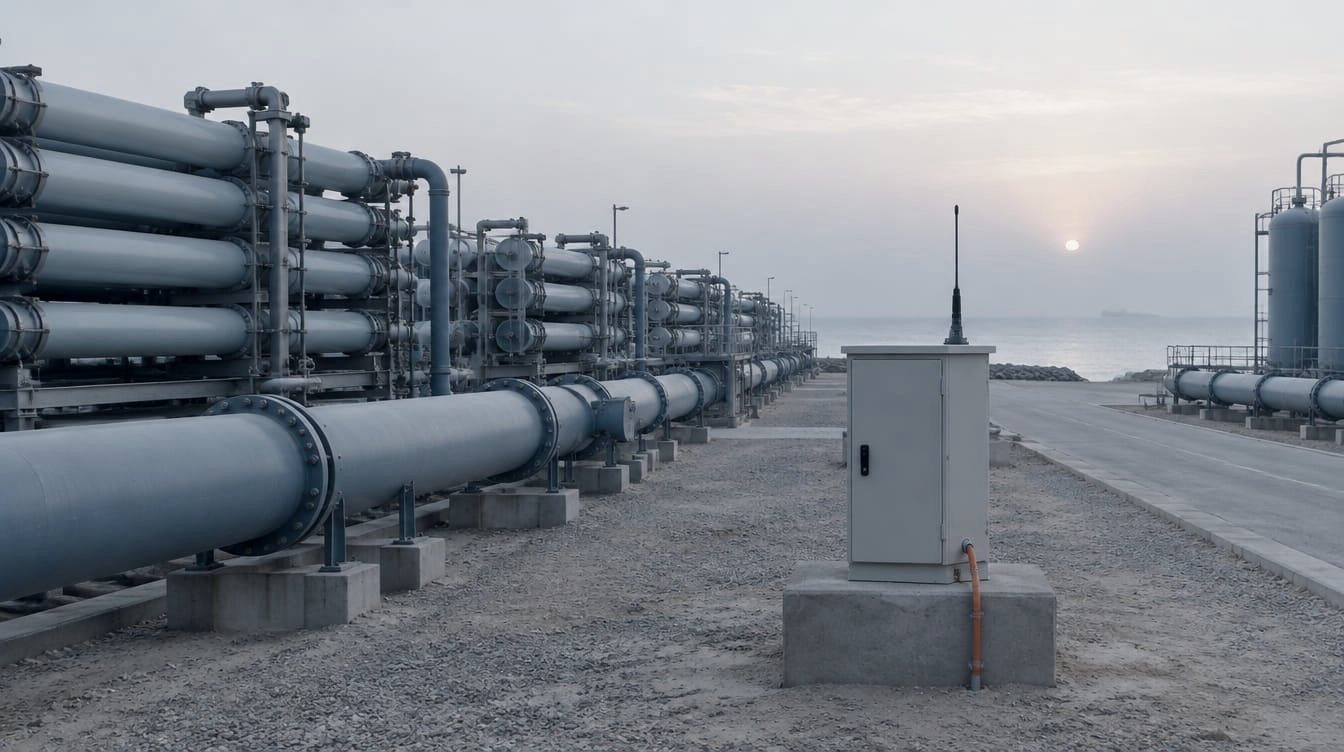
What happens between the sea and your tapIn the Gulf, most tap water starts as seawater.
- Lesson 0.27 minBeginner
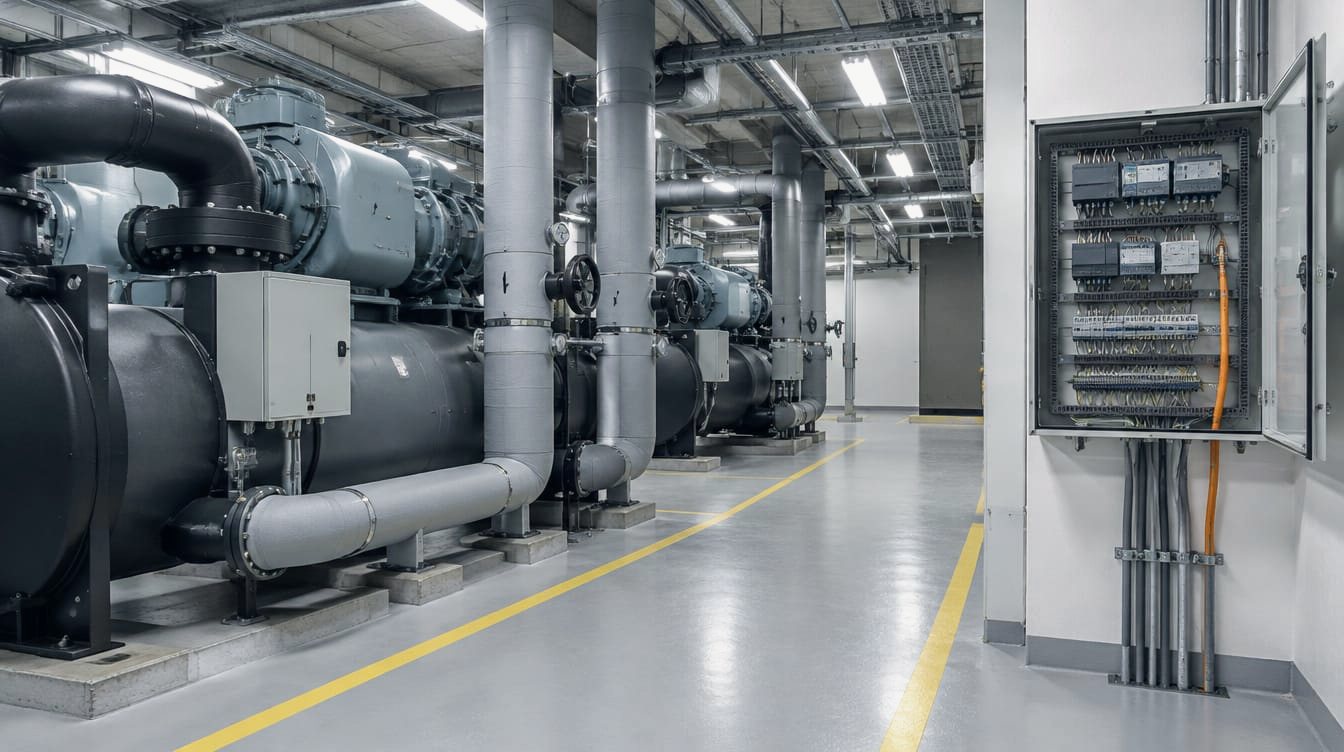
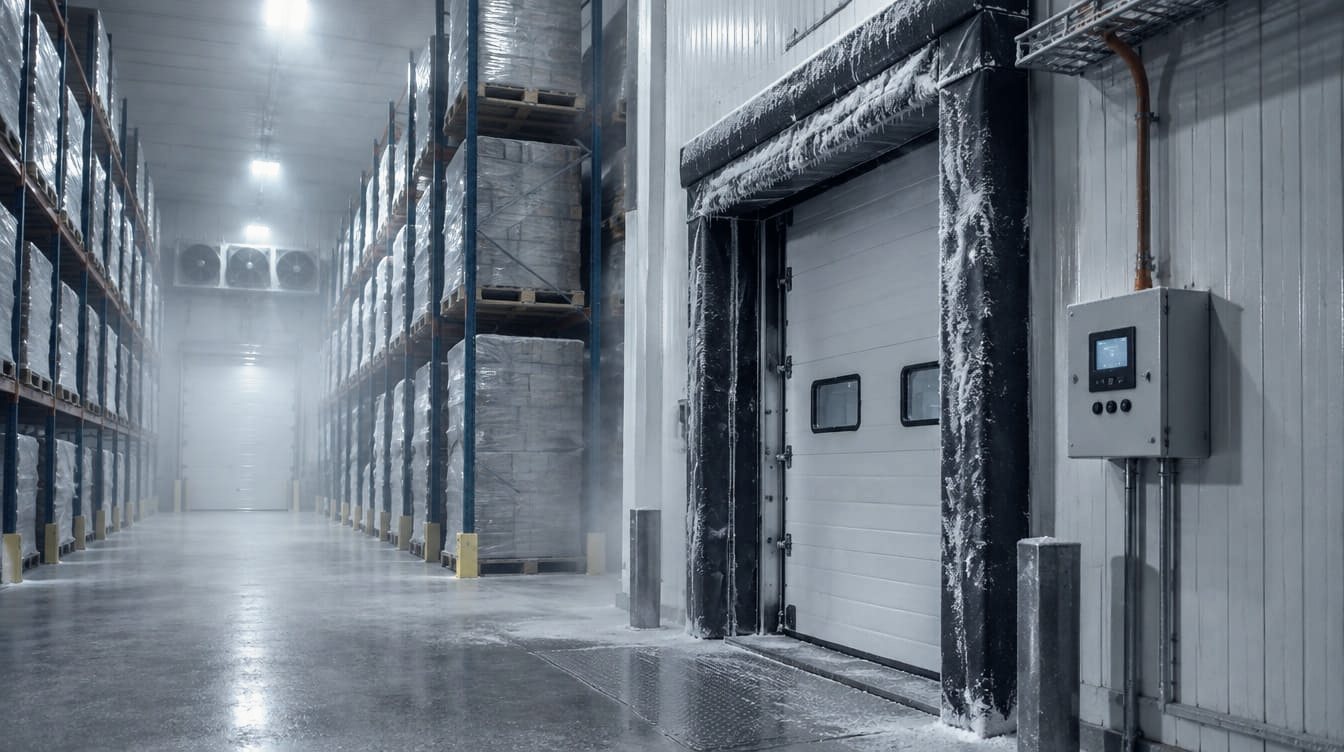
How a tower stays at 22°C when it's 45°C outsideMost large Gulf buildings don't make their own cold air from scratch.
- Lesson 0.36 minBeginner
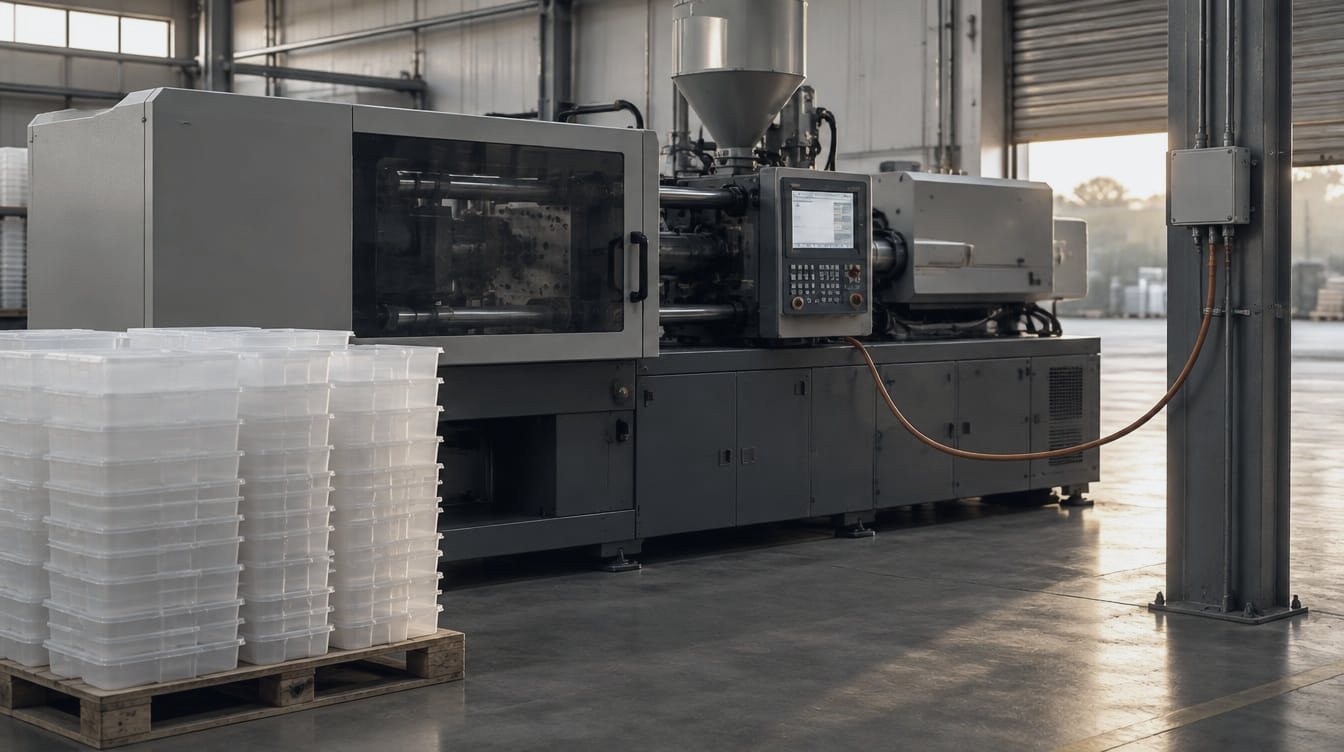
A day in a control roomA control room operator watches a plant, utility or building through screens, responds to alarms, adjusts setpoints and coordinates with people in the field.
- Lesson 0.48 minBeginner
Careers in OT: the roles, the skills, and how to startOT careers span the people who run plants (operators, technicians), the people who build and change control systems (automation and controls specialists), and the people who connect and protect them (OT network and security roles).
Module 1
What OT is
The ideas everything else is built on.
- Lesson 1.17 minBeginner
What is operational technology (OT)?Operational technology (OT) is the hardware and software that monitors and controls physical equipment: pumps, valves, motors, conveyors, chillers and lifts.
- Lesson 1.28 minBeginner
IT vs OT: seven differences that matter on a plant floorIT manages information: email, files, finance systems.
- Lesson 1.37 minBeginner
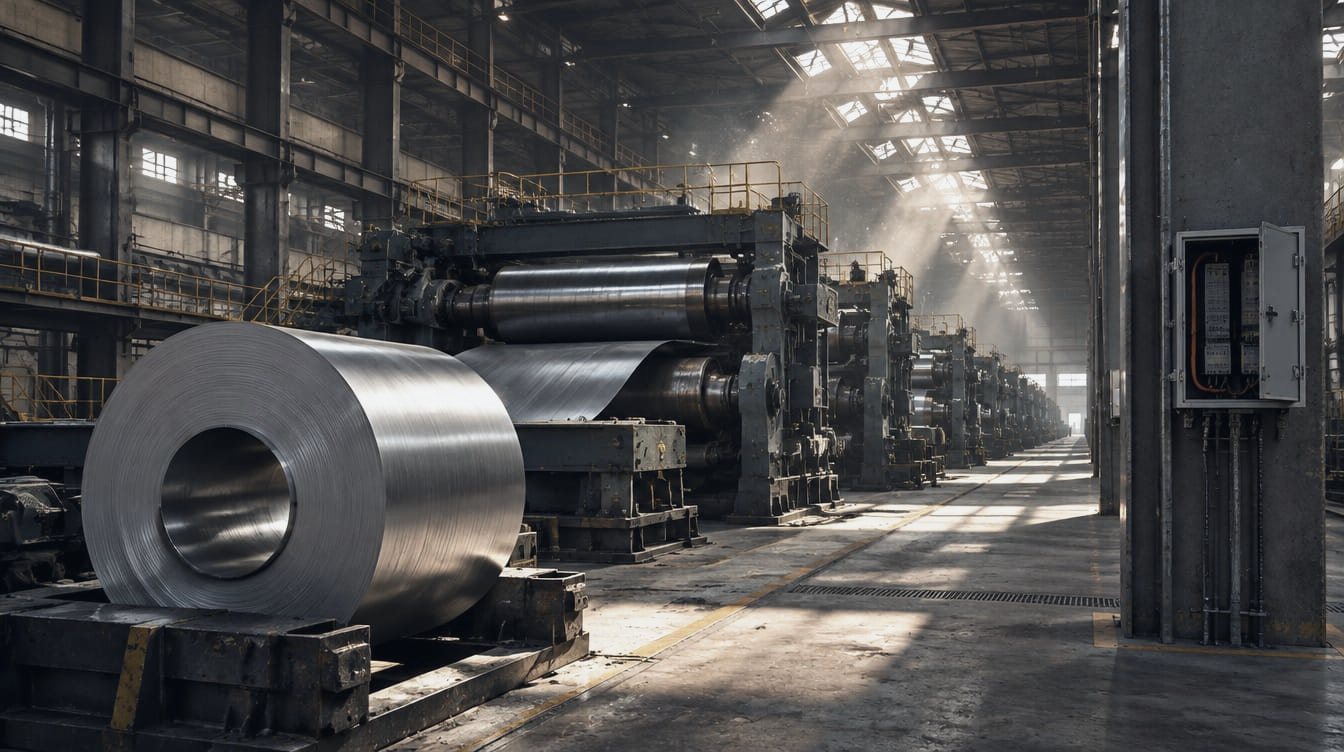
Where is OT used? Plants, utilities and the building you're sitting inOT is used anywhere physical equipment is controlled by computers: water and wastewater, electricity, oil and gas, manufacturing, food, district cooling, transport, hospitals and commercial buildings.
- Lesson 1.46 minBeginner
Why plant systems run for twenty-five yearsControl systems stay in service for 15 to 25 years because they are paid for with the machine, certified to work as a whole, and expensive to stop.
- Lesson 1.56 minBeginner
Safety first, then the process, then the dataIn OT, risk is ranked by physical consequence.
- Lesson 1.67 minBeginner
A short history: from relay walls to connected plantsPlants were first controlled by walls of hard-wired relays.
Module 2
The machines
Every box in a control system, and what it does.
- Lesson 2.16 minBeginner
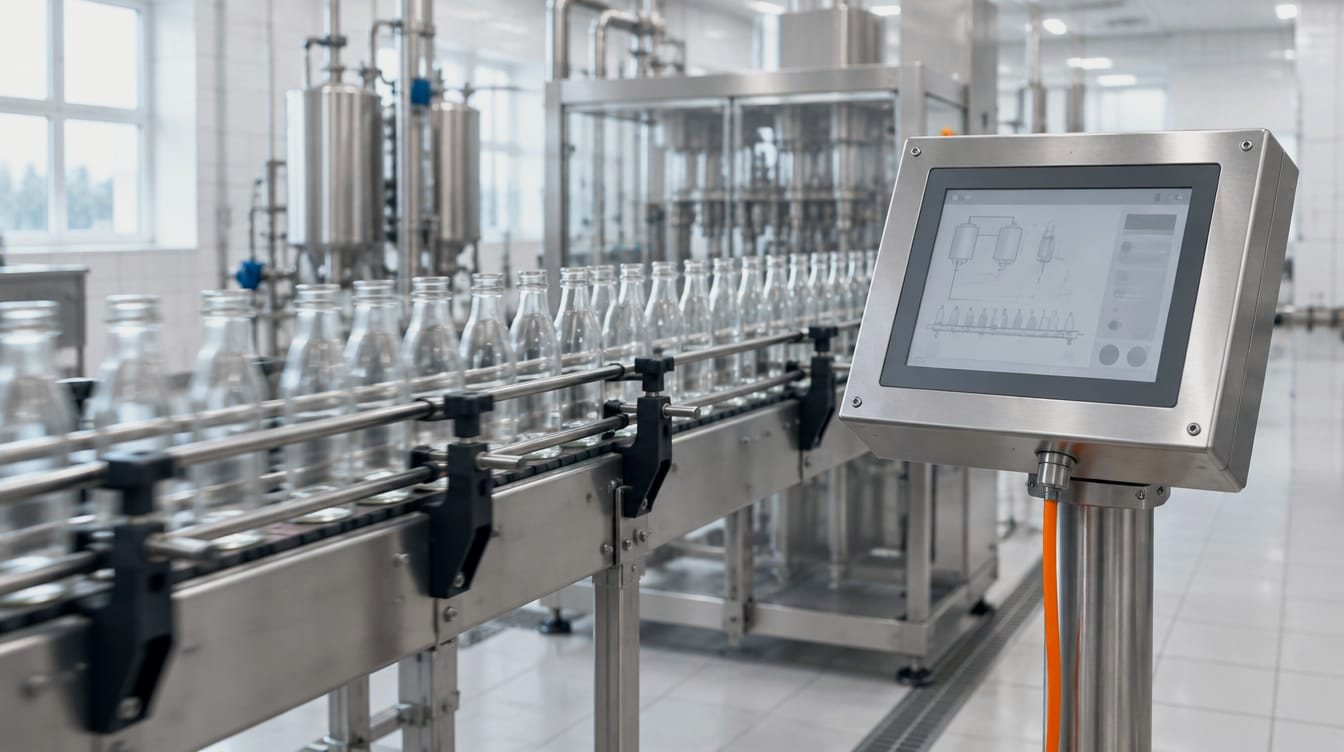
Sensors and actuators: the plant's senses and musclesSensors measure the physical world: temperature, pressure, flow, level, position.
- Lesson 2.28 minBeginner
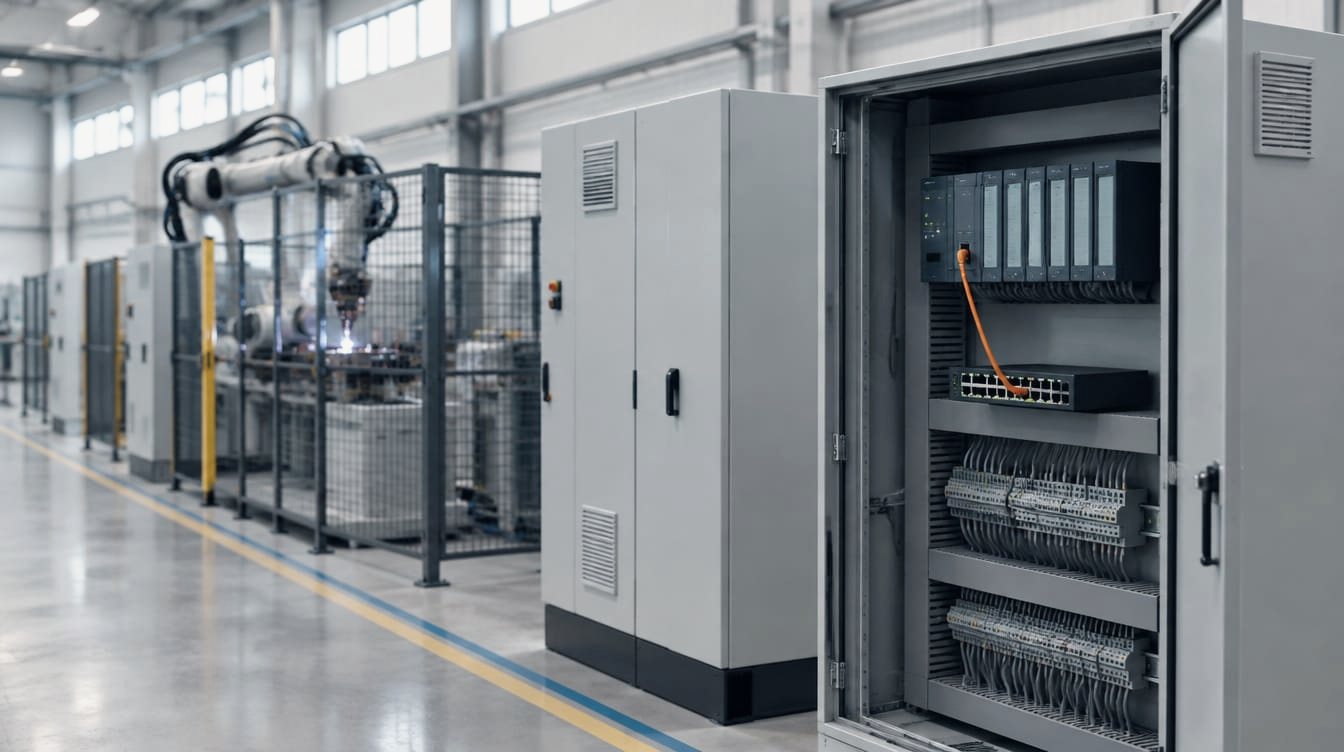
What is a PLC? How a programmable logic controller worksA PLC (programmable logic controller) is a rugged industrial computer that runs a machine or process.
- Lesson 2.36 minBeginner
What is an RTU? Remote terminal units and telemetryAn RTU (remote terminal unit) is a controller built for remote, unstaffed sites such as pumping stations, substations and pipeline valves.
- Lesson 2.46 minBeginner
What is a DCS? Distributed control systems explainedA DCS (distributed control system) controls a large continuous process, such as a refinery, chemical plant, power station or large chiller plant, from one integrated system.
- Lesson 2.58 minBeginner
What is SCADA? Supervisory control explained simplySCADA (supervisory control and data acquisition) is the system operators use to watch and control equipment from a central point.
- Lesson 2.65 minBeginner
What is an HMI? The screen between people and the plantAn HMI (human-machine interface) is the screen and software operators use to see and control a machine or process.
- Lesson 2.76 minBeginner
Historians and engineering workstations: the two machines everyone forgetsA historian is a database that records process values over time, used for reports, troubleshooting and quality records.
- Lesson 2.87 minBeginner
What is a safety instrumented system (SIS)?A safety instrumented system (SIS) is an independent control system that watches a process and automatically takes it to a safe state, usually a shutdown, when conditions become dangerous.
- Lesson 2.97 minBeginner
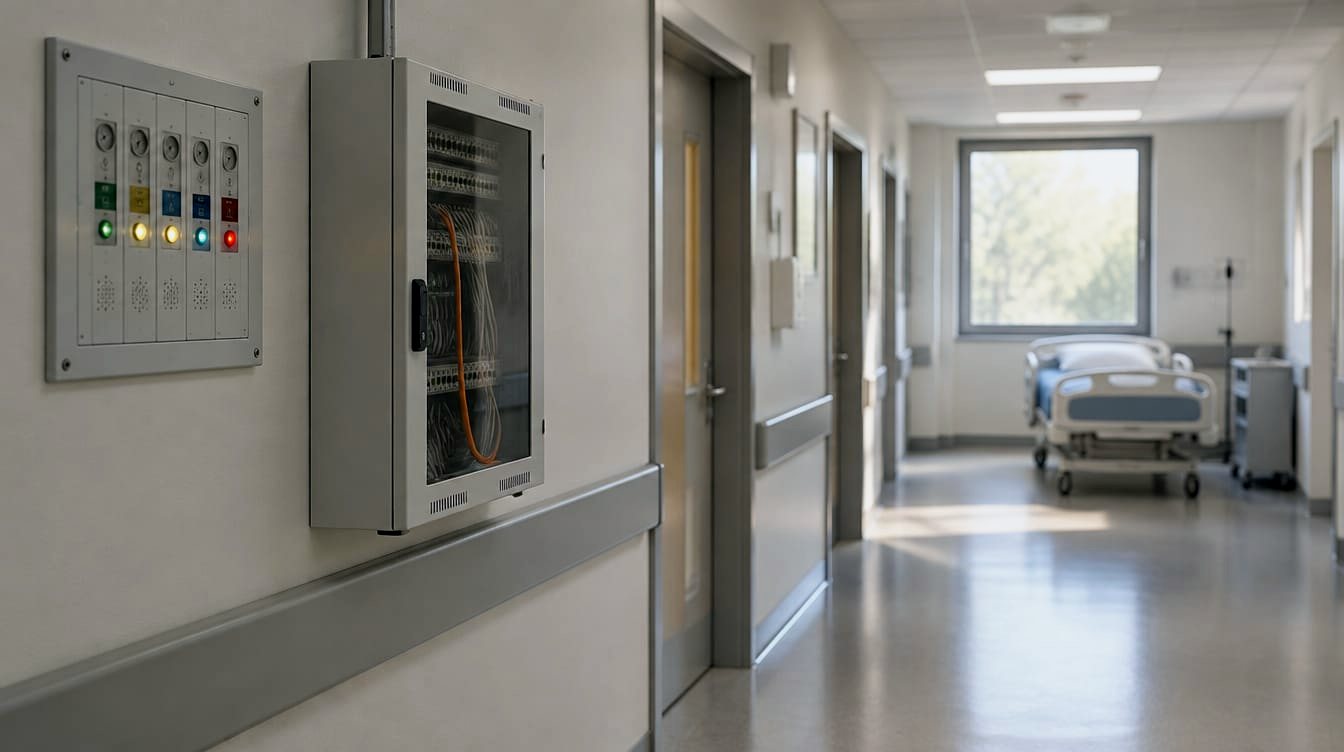
What is a BMS? Building management systems explainedA BMS (building management system, also called BAS or BMCS) monitors and controls a building's mechanical and electrical services: air conditioning, chillers, pumps, ventilation, lighting and often energy metering.
Module 3
How machines talk
Signals, fieldbuses and protocols.
- Lesson 3.15 minBeginner
4–20 mA: the signal that runs most plants4–20 mA is the standard way a field instrument sends a measurement to a controller: a small current on two wires, where 4 mA means the bottom of the range and 20 mA the top.
- Lesson 3.25 minBeginner
Fieldbus: from wires to networksA fieldbus is a digital network that connects many field devices (sensors, drives, valves) to a controller over shared cable, instead of one pair of wires each.
- Lesson 3.37 minBeginner
Modbus explained: the language almost every device speaksModbus is a simple request-and-response protocol published by Modicon in 1979.
- Lesson 3.45 minBeginner
DNP3 and telemetry protocolsDNP3 and IEC 60870-5-104 are protocols built for SCADA systems talking to remote sites over slow or unreliable links.
- Lesson 3.55 minBeginner
BACnet explained: how buildings talkBACnet is the main communication standard for building automation, first published as ASHRAE Standard 135 in 1995 and adopted as ISO 16484-5 in 2004.
- Lesson 3.65 minBeginner
PROFINET and EtherNet/IP: industrial EthernetPROFINET and EtherNet/IP are the two most widely used industrial Ethernet protocols.
- Lesson 3.75 minBeginner
OPC UA explained: the modern way to share plant dataOPC UA (Open Platform Communications Unified Architecture) is a standard, published as IEC 62541, for moving data between industrial devices and software.
- Lesson 3.85 minBeginner
Why most plant protocols trust whoever is talkingMost industrial protocols were designed when control networks were closed, so they check that a message is well-formed but not who sent it.
Module 4
How a plant network is laid out
Purdue levels, zones and every way in.
- Lesson 4.18 minBeginner
The Purdue model, level by levelThe Purdue model is a reference map that organises an industrial site into levels: Level 0 is the physical process, 1 the controllers, 2 supervisory systems, 3 site operations, and 4–5 the business and enterprise networks.
- Lesson 4.25 minBeginner
Level 3.5: the one deliberate crossingLevel 3.5, the industrial DMZ, is a buffer network between the plant (Levels 0–3) and the business network (Levels 4–5).
- Lesson 4.35 minBeginner
Zones and conduitsA zone is a group of assets that share the same protection needs, such as all the controllers on one line.
- Lesson 4.45 minBeginner
Flat networks: why one switch can see the whole plantA flat network is one where every device can reach every other device, with no boundaries in between.
- Lesson 4.55 minBeginner
Air gaps: real at commissioning, rarely foreverAn air gap means a network has no physical or wireless connection to any other network.
- Lesson 4.66 minBeginner
Every way in: remote access pathsPlants are reached remotely through vendor cellular modems, VPNs, remote desktop tools installed on HMIs, cloud gateways on machines, and telemetry links to remote sites.
Module 5
What the field has learned
Real incidents, and what changed because of them.
- Lesson 5.17 minBeginner
Stuxnet, 2010: the first code built to break machinesStuxnet was malware discovered in 2010 that targeted Siemens PLCs controlling uranium enrichment centrifuges at Natanz in Iran.
- Lesson 5.26 minBeginner
Ukraine's grid, December 2015On 23 December 2015, attackers who had been inside three Ukrainian power distribution companies for months remotely opened breakers at substations, cutting power to about 225,000 customers for several hours.
- Lesson 5.36 minBeginner
Triton and the safety system, 2017Triton (also TRISIS or HatMan) was malware that targeted Schneider Electric Triconex safety instrumented systems at a petrochemical plant in Saudi Arabia in 2017.
- Lesson 5.45 minBeginner
Target, 2013: the HVAC contractor's loginIn late 2013, attackers stole data from about 40 million payment cards at the US retailer Target.
- Lesson 5.55 minBeginner
Oldsmar, 2021, and why the story changedIn February 2021, officials in Oldsmar, Florida, reported that someone had remotely accessed the water treatment plant's control computer and raised the sodium hydroxide setting from about 100 to 11,100 parts per million before an operator reversed it.
- Lesson 5.65 minBeginner
The ordinary ones: laptops, USB sticks, forgotten modemsMost OT incidents are ordinary: a contractor's laptop that brings malware onto the plant network, a USB stick used to move files, an office update that restarts a control PC mid-shift, or a vendor modem nobody knew about.
Module 6
Knowing what you have
Inventories, passive listening, walk-downs.
- Lesson 6.15 minBeginner
What an asset inventory containsA useful OT asset inventory records, for every device: make, model and firmware; Purdue level and zone; who it talks to and how; its owner and any vendor access; where it physically sits; and what happens to the process if it fails.
- Lesson 6.25 minBeginner
Passive first: listening before touchingA passive assessment copies network traffic from a switch's mirror (SPAN) port and analyses it without sending anything to the controllers.
- Lesson 6.35 minBeginner
The cabinet walk-downA cabinet walk-down is a physical inspection of control panels, network cabinets and plant rooms, done with the people who maintain them.
- Lesson 6.45 minBeginner
Criticality: ranking by consequenceCriticality ranks each asset by the physical consequence of it failing or being misused: safety, environment, production, quality, cost.
Module 7
Protecting a running plant
What works without stopping the line.
- Lesson 7.16 minBeginner
Segmentation in stagesSegmentation divides a plant network into zones with controlled paths between them, so a problem in one place can't spread everywhere.
- Lesson 7.25 minBeginner
Allow-listingAllow-listing means permitting only what is known to be needed and blocking everything else.
- Lesson 7.35 minBeginner
Brokered vendor accessBrokered access means vendors reach plant systems only through a single gateway in the Level 3.5 DMZ, using named accounts, multi-factor authentication and access that is switched on for a specific job and time.
- Lesson 7.45 minBeginner
Patching on the plant's calendarOT patching follows the plant's calendar: patches are checked for relevance, approved by the system vendor, tested, and installed in planned maintenance windows that may come only a few times a year.
- Lesson 7.55 minBeginner
Backing up controller logicEvery controller program, HMI project, drive parameter set and network device configuration should have a current, tested backup stored off the plant network.
- Lesson 7.65 minBeginner
Watching the networkOT network monitoring watches plant traffic passively and compares it with a learned picture of normal.
- Lesson 7.76 minBeginner
When something happensOT incident response puts safety first and keeps the process stable while the problem is understood.
Module 8
Standards, plainly
IEC 62443, NIST SP 800-82, ISA-95.
- Lesson 8.17 minBeginner
IEC 62443 for plant ownersISA/IEC 62443 is a series of standards for protecting industrial automation and control systems.
- Lesson 8.25 minBeginner
NIST SP 800-82, the free guide everyone usesNIST Special Publication 800-82 Revision 3, the Guide to Operational Technology, was published in September 2023 by the US National Institute of Standards and Technology.
- Lesson 8.35 minBeginner
ISA-95 and where the Purdue model came fromISA-95, published internationally as IEC 62264, is a standard for integrating plant systems (production, quality, maintenance) with business systems such as ERP.
- Lesson 8.45 minBeginner
Reading a standard without a consultantTechnical standards follow a common structure: scope, normative references, terms and definitions, then requirements.
After the course
The learning shelf.
When you have finished these lessons, go deeper. Our learning shelf lists the best free courses we know (CISA, a long free starter course on YouTube, hands-on labs) and the certificates the industry trusts, from ISA/IEC 62443 to GICSP.